

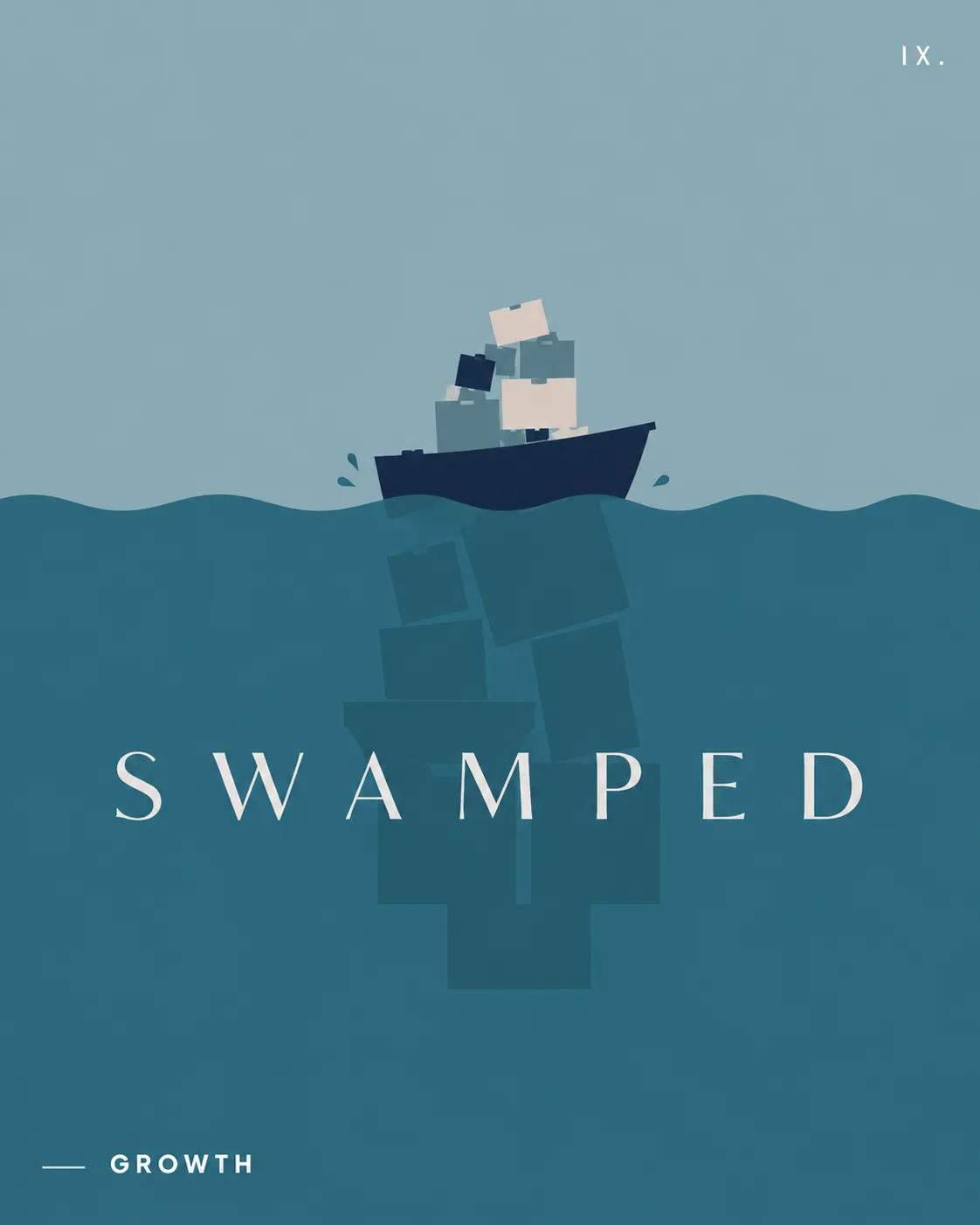
Influence is necessary. Imitation is dangerous.
A business that only talks to itself eventually gets smaller. Same people. Same books. Same hires. Same explanations for the same problems. That kind of repetition can feel like conviction for a while, but it usually becomes a ceiling. A company that refuses all outside influence is not protecting its identity. It is protecting its habits.
But the opposite risk is just as real. You can consume so many frameworks, books, advisors, podcasts, and management theories that the business starts speaking in someone else’s voice. The team learns the language of the latest idea before it has learned what the company actually needs. The operator starts performing the model instead of running the business in front of them. That is not growth. That is drift.
Writers know this danger better than operators do. The strongest ones spend whole careers managing their distance from the voices they admire.
O’Connor kept her distance from Faulkner
Flannery O’Connor understood the danger. She admired William Faulkner, but she kept her distance from him. Faulkner’s shadow over Southern literature was enormous, and O’Connor knew it. She once said she kept clear of Faulkner so her own little boat would not get swamped.
That is the line. Not because Faulkner was bad. Not because influence was bad. But because proximity to a powerful voice can pull your own voice out of shape.
Businesses have the same problem. A founder goes to a conference and comes back with a new operating model. A leadership team reads the same management book and starts renaming old problems in new language. A sponsor brings in a playbook that worked somewhere else. A consultant introduces a framework that is useful, but only if the company can adapt it without becoming a copy of the last business that used it.
The question is not whether the idea is good. The question is whether the idea still fits once it touches the business.
What survives contact with the work
A trades business has its own history. Its own customer promises. Its own field rhythm. Its own way of making decisions when the schedule breaks, when the tech calls out, when the customer escalates, when the system says one thing and the person who knows the work says another. That history matters. You can improve it. You can challenge it. You can replace parts of it. But if you ignore it, the new idea will either fail or become theater.
A useful idea should survive a few practical questions. Does this fit the work we actually do? Does it make the business clearer or just more impressive to talk about? Can the team use it when the week gets hard? Does it respect what already works here? Does it help us make better decisions, or does it just give us better language for the same confusion?
The best leaders are not closed off. They are also not easily capsized. Stay open. Keep learning. Bring in new people, new models, new arguments, and new ways of seeing the work.
Just do not let someone else’s wake swamp the boat.
How We Work describes how a study starts from the way your business already runs.