

Every card has something behind it
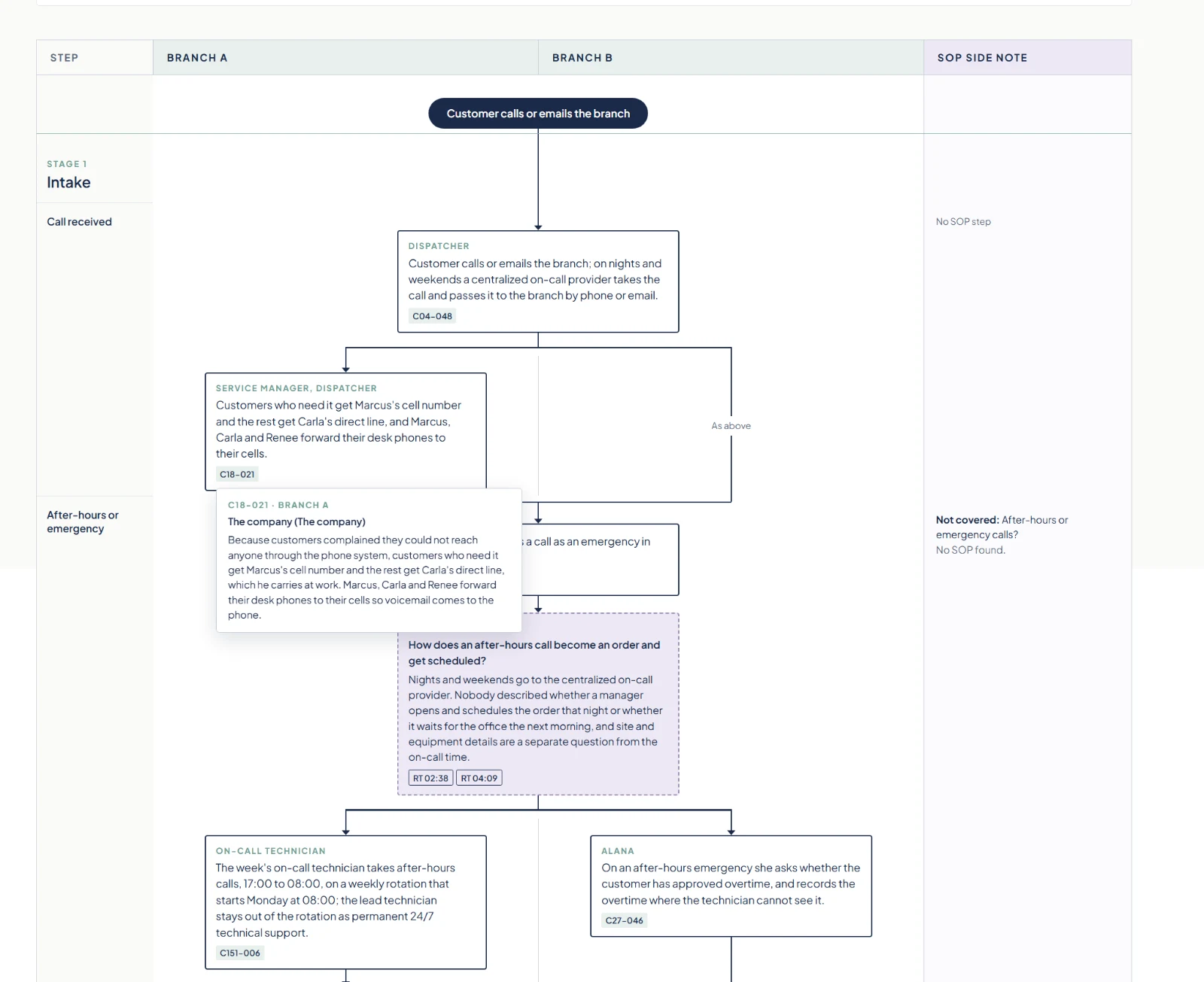
Source references are tagged directly on each process card. Open C18-021, for example, and you can trace the information back to the source we used to derive it.
Those connections live in our proprietary database, designed from the ground up to support Solhver engagements. The blueprint is a view into that structured record, with the evidence attached. It is not simply an AI-generated readout.
This is where our experience enters the record
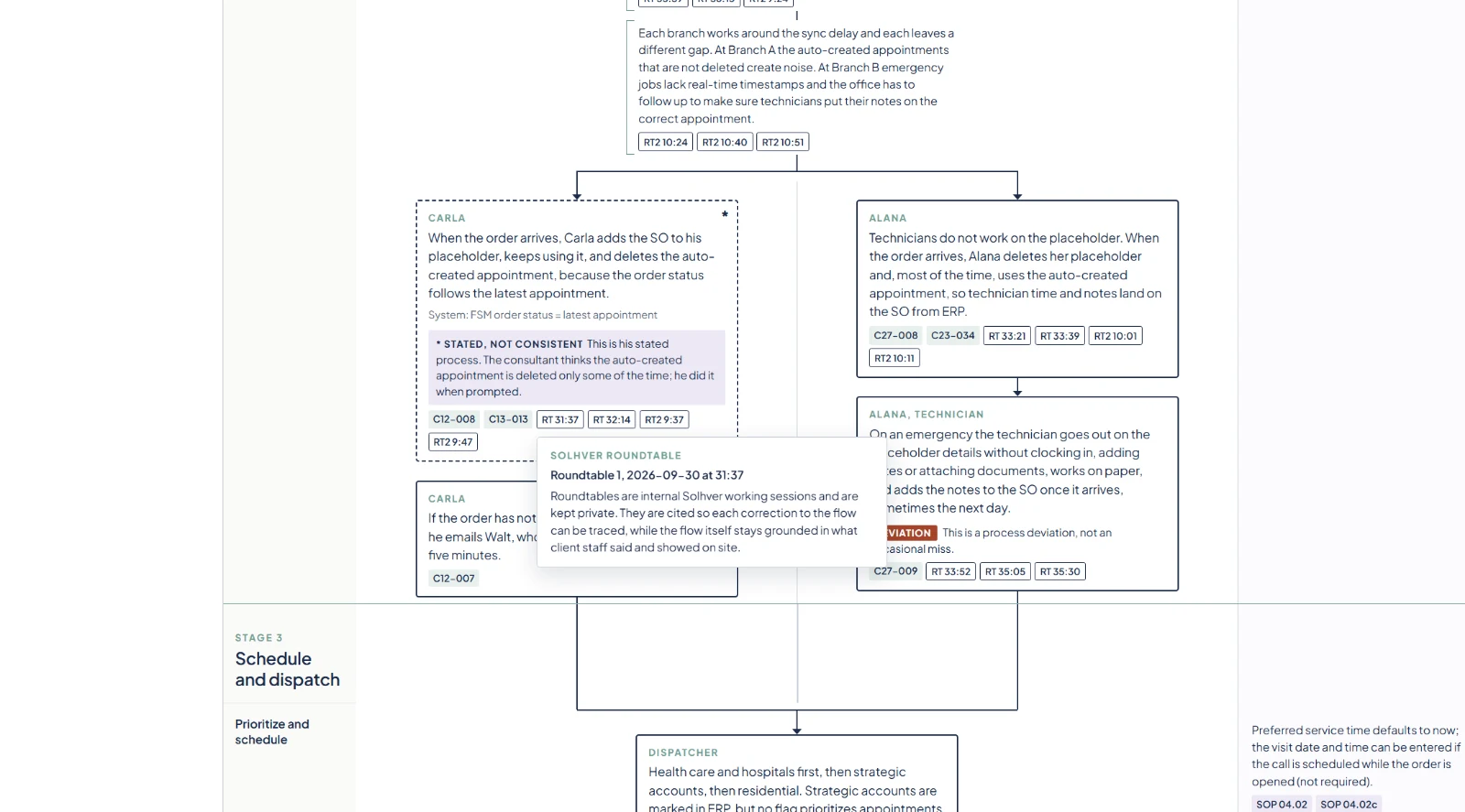
Roundtables are internal Solhver working sessions where we compare what we heard with what we observed, and apply our experience running trades businesses. We challenge explanations, identify inconsistencies, and decide what needs another look. They are noted as RT notes on the flows.
That judgment becomes part of the data. The “STATED, NOT CONSISTENT” note is one example: someone described a process, but our observations gave us reason to question how reliably it happened. The RT 31:37 in the example traces that qualification to our review.
You can reproduce the callout. The experience behind the callout takes rather longer.
The blueprint comes with the detail behind it
The written report brings the findings together. Supporting assessments, registers, and plans give the people acting on them the detail they need.
The set is scoped to the engagement. An integration study and a focused operational review will not need identical documents.
The overview
Executive deck
The main findings and decisions for leadership.
Long-form written report
The full account of how the business runs, what matters, and the recommendations.
The business blueprint
Process blueprints
The steps, handoffs, exceptions, and dependencies behind the work.
Organization and key-person diagrams
Where responsibility actually sits and whose knowledge the operation depends on.
The supporting assessments
- Communication and information flow
- People operations baseline
- Sales and revenue processes
- Systems inventory
- Fleet and asset condition inventory
- Back-office process baseline
- Reporting and KPI inventory
- Customer and commercial dependencies
- Licensing, insurance, and compliance-document checklist
These assess operational practices and available records. They are not financial diligence, asset appraisals, compliance audits, or IT security assessments.
The working documents
Risk register
Findings brought together with priorities, recommended actions, and ownership.
Integration sequencing plan, where relevant
What moves first, what depends on it, and what should wait.
Working definitions
Shared meanings for the terms used throughout the record.
One finding keeps the same reference across the report, register, and plan, so readers can follow it without reconstructing the connection.